High-performance.
Sustainable.
Polymers.
Patented POM technology for specialty polymers: 60% lower carbon footprint, uncompromised performance.
patented technology
lower CO2-footprint compared to benchmark
endless possibilities
What we do
High-performance Polymer Solutions with up to 60% Lower Carbon Footprint
Our POM-based polymers combine sustainability with superior performance. By integrating polyoxymethylene (POM) into polyether polyols we provide a novel, innovative and more sustainable polyether polyol platform technology. Performance benefits are application dependent ranging from better material compatibility with e.g. PE or PP packaging for resulting adhesives over lower oxygen transmission rates (OTR) of coating materials to thermoplastic polyurethanes (TPUs) with higher modulus and improved tear resistance.
POM (Polyoxymethylene)
A high-performance engineering plastic known for its strength, stiffness, and low friction.
OTR (Oxygen Transmission Rate)
A measure of how much oxygen passes through a material, commonly used to evaluate barrier properties.
TPU (Thermoplastic Polyurethane)
A versatile elastomer combining the elasticity of rubber with the processability of thermoplastics.
Products
The next generation of polymers
Our current focus is particularly directed towards industrial adhesives & coatings, thermoplastic polyurethanes (TPUs) and lubricants, but we are also always open to addressing new fields.
What sets us apart
Better Compatibility.
Better Recyclability.
Better Performance.
The integration of POM into our POM-polyols provides better compatibility of resulting materials with e.g. PE, PP or PLA. The POM-blocks further provide upside for enhanced mechanical as well as chemical recyclability and also additional performance benefits such as lower oxygen transmission rates.

» Sustainable

» Smart

» Safe
PE (Polyethylene)
A widely used plastic known for its flexibility, chemical resistance, and low cost, commonly used in packaging and containers.
PP (Polypropylene)
A durable, heat-resistant plastic with good chemical resistance, often used in automotive parts, packaging, and textiles.
PLA (Polylactic Acid)
A bio-based, biodegradable plastic made from renewable resources like corn starch, commonly used in packaging and 3D printing.
Stay up to date
1–2 emails per year on breakthroughs in sustainable polymers.
News
Here’s what’s new
Stay up to date with the latest news, projects, and developments from Power2Polymers.
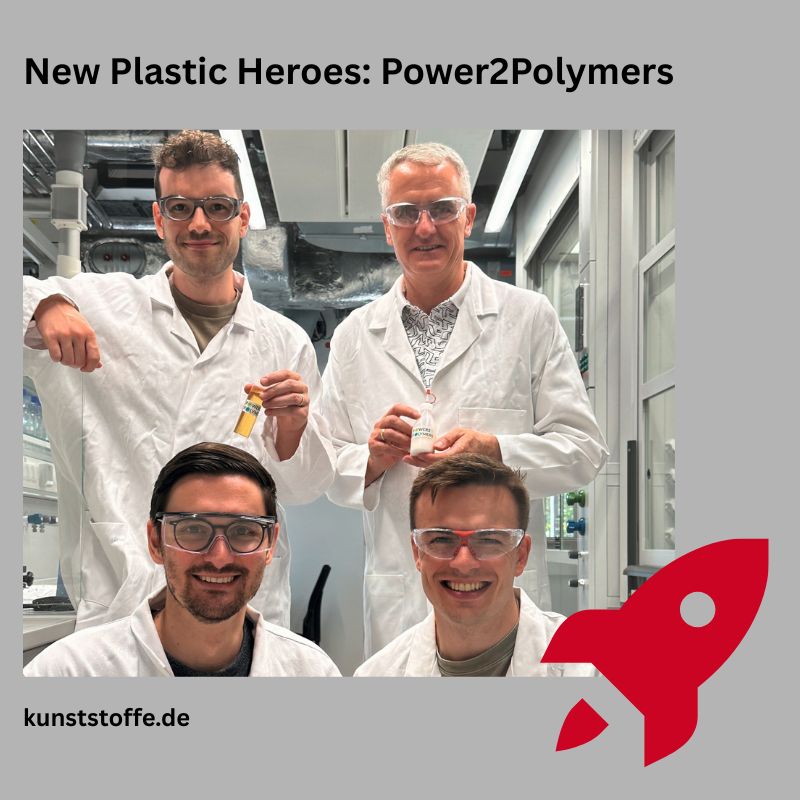
Plastic Insights
“Even in Challenging Times, Innovation Is Possible”
2026

wir.bewegen.nrw
Nordrhein-Westfalen und EU fördern 20 grüne Start-ups
2026

Impact Festival
Power2Polymers from Germany wins main prize.
2026

CHEManager
Sustainable polymers with application advantages.
2025
Power2Polymers is proudly funded by European and German funds.




FAQ
Frequently Asked Questions
Tell us what you need and we’ll make it work

Dr. Guido Schroer
CEO